07973 265682
6 Oak Passage Chambers High Street Hastings TN34 3EH

Homepage

Becoming You

“The privilege of a lifetime is to become who you truly are.” – C G Jung

“Individuation, becoming a Self…is the problem of all life.” – C G Jung

“The psyche has an inherent tendency to heal itself. The task of the therapist is to prepare the path for this propensity.” – Dora Kalff

Become The Person You Are Meant To Be

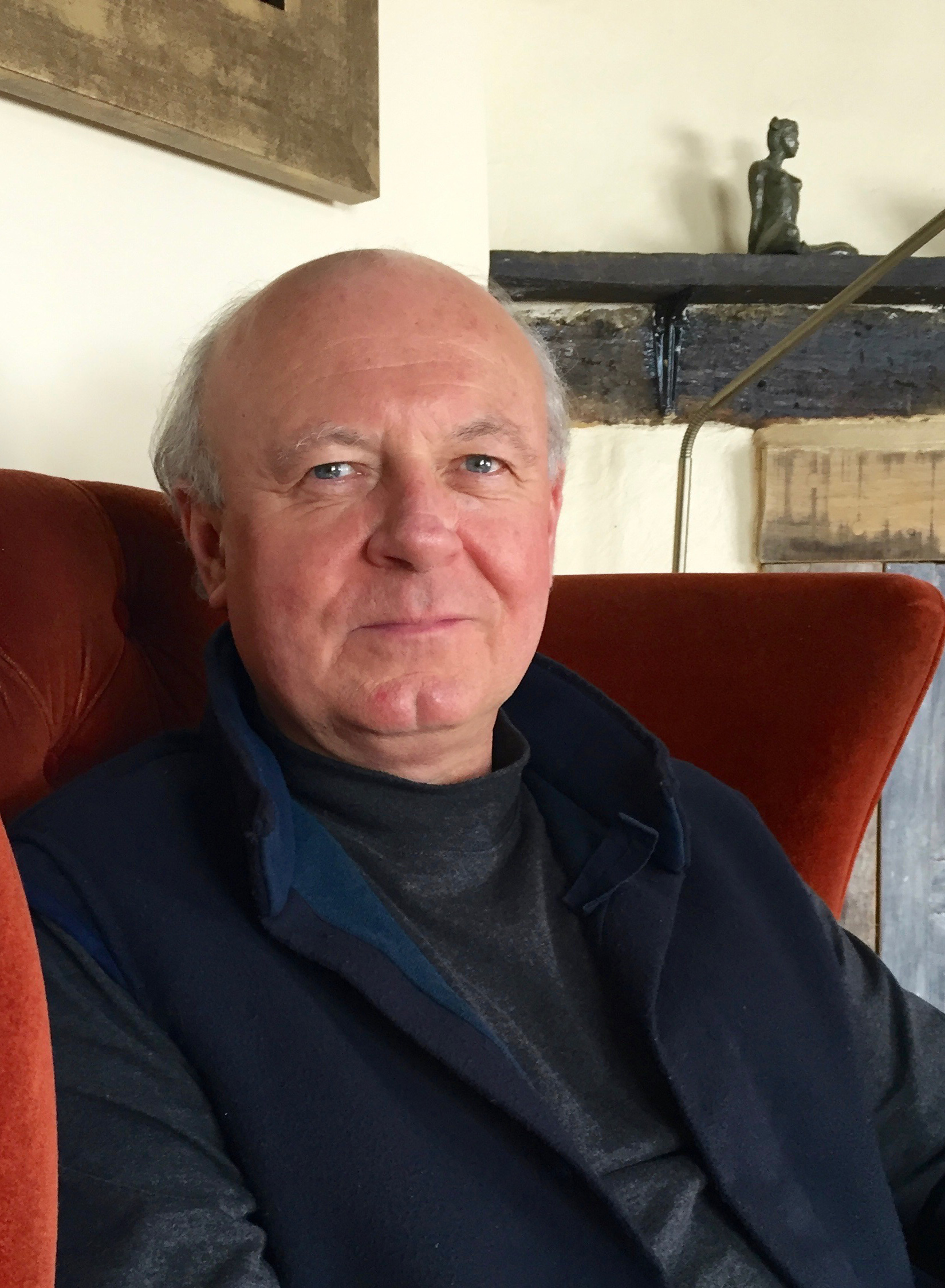
David Genty, Jungian Psychoanalyst IAAP

Training Analyst & Supervisor, C G Jung Institute, Zürich
Senior Analyst, IGAP, London
President, C G Jung Foundation, Zürich

David Genty & Jungian Analysis

I am a Jungian Psychoanalyst trained at The C G Jung Institute Zürich, where I am an accredited Training Analyst, supervisor and instructor member. My thesis explores the dream, active imagination and self-remembering. I have a particular interest in the nature and use of attention in daily life and in the analytic encounter.

My journey to training in psychology and Jungian analysis took a long and winding path. An early interest in spirituality led me to study Philosophy & Theology at Jesus College Oxford, and later, Art History at Kent Canterbury. An international career in the art world followed, before returning to focus on psyche. I have worked in a local NHS acute psychiatric unit, and now have a private practice at my home in the centre of Tonbridge.

I believe that the work done in Jungian analysis comes out of a mutual process which is open-ended. It is a joint work. Analysis is about becoming conscious of who you are. This is the most unique adventure of discovery a person can embark upon.

The drive of the unconscious part of our nature is towards wholeness. In analysis we listen to the compensatory, complementary and sometimes prospective communication from the unconscious….hearing the voices of the soul balancing the relationship of conscious and unconscious. This process of coming into psychic balance Jung termed ‘individuation’.

In analysis you can learn to listen to and understand your inner voice, gain a deeper sense of self, meaning and purpose in life, to become the person you are meant to be.

Exploring issues with an analyst can lead to greater integration of aspects which have perhaps been difficult to acknowledge, and a release from long-held negative patterns and suffering.  This exploration can find ways of moving forward in life.

Jungian Analysis

Why might you seek Jungian Analysis ?

  • Are you feeling depressed, sad, or anxious?
  • Are you suffering from stress or phobias?
  • Are you entering a new phase of life, a period of transition?
  • Do you feel you have lost your way?
  • Do you feel empty, that your life has lost meaning?
  • Are you stuck in the same patterns of behaving?
  • Do you have relationship difficulties with your partner, family or work colleagues?
  • Are you an artist or writer who is feeling blocked?
  • Have you had a dream that you would like to explore further and understand?

Jungian analysis can help with depression, anxiety, stress, relationships, ‘stuckness’, and can alleviate symptoms of neurotic conditions.

‘The psychological trouble in neurosis, and the neurosis itself, can be formulated as an act of adaptation that has failed….a neurosis is, in a sense, an attempt at self-cure…’ (Jung, CW4 para 574).

Structurally, Jung saw neurosis as the dissociation of two personalities kept apart by powerful emotional barriers. This discord is between conscious and unconscious attitudes. ‘Neurosis is an inner cleavage…the state of being at war with oneself. What drives people to war with themselves is the suspicion or the knowledge that they consist of two persons in opposition to one another…A neurosis is a splitting of personality.’ (Jung, CW11 para 522)

We’re all neurotic to one degree or another to the extent that we can’t be who we really are.

The symptom is often a calling. Suffering which hasn’t found its meaning. What is the meaning of the symptom ? What is the necessary task to be accomplished ?   Neurotic symptoms indicate that the psyche is striving for wholeness. In analysis we focus on this positive, purposive aspect of holding the tension of the opposites, to bring forth, deo concedente, a new position and a widening of consciousness.

Not everyone seeking Jungian Analysis has specific issues.

You may come into therapy to find new direction and meaning in life, to start a journey of discovery.

Forgotten and undeveloped talents and qualities may need to find expression.

Jungian analysis is a long-term dialectical relationship between two people, analyst and analysand/therapist and client. It is directed toward an exploration of the analysand’s unconscious, through dreams, symptoms, and patterns of behaviour. This process can alleviate what might be an intolerable psychic condition which is interfering with conscious life. The goal is the analysand’s movement towards psychological wholeness, a process Jung called ‘individuation’.

In analysis we become aware of those unconscious factors influencing our behaviour. With greater awareness of these issues comes a greater sense of well-being, acceptance and personal control of our lives.

Ultimately, the analytic process helps us to experience life in a more related and authentic way. The role of the analyst is to help facilitate the individuation process, accompanying the analysand/client on his or her personal journey.

I am an Accredited Training Analyst & Instructor member of the C G Jung Institute Zürich (CGJI), and a member of the International Association for Analytical Psychology (IAAP). I am also a member of the Independent Group of Analytical Psychologists (IGAP) London.

Jungian Dreamwork
What Is Jungian Dreamwork

The aim of dreamwork is to explore the various images and emotions that a dream presents and evokes, while not attempting to find a single unique dream meaning. In this way the dream remains alive and understanding awakens.

Every dream comes in the service of health and wholeness

In a dreamwork group session, a dream is presented and worked on. The dreamworkers ask questions about the dream – with the answers carefully listened to – before offering any suggestions about what the dream might mean.

Dreamers are not obliged to agree with what is said and may use their own judgement in deciding which comments appear valid or provide insight. There may well be several things that are said by participants that seem valid to the dreamer but it can also happen that nothing does. Appreciation of the validity or insightfulness of a comment from a dreamwork session can come later, sometimes days after the end of the session.

Listen with your heart and head to explore your dreams

During my training at The C G Jung Institute I had the good fortune to participate in the Dreamwork group seminars led by Dr Art Funkhouser.

I was deeply moved and inspired by these seminars held in the Kellersaal, the womb-like basement room with huge oak beams and soft terracotta brick in the oldest part of the building. I have also been encouraged by Art to offer such dreamwork groups to supplement and counter balance my individual analytical work. The groups will follow Art’s ground rules.

Dr Funkhouser is a senior Jungian analyst, trained at The C G Jung Institute in the 1970’s, and a founder member of the International Association for the Study of Dreams.

“I believe that dreams are an essential tool that can be used for individuals seeking healing, self-understanding, and spiritual awakening. In dreamwork you can find helpful new perspectives that elude the conscious mind.”

Current Fees:

£40 per person for the Dream Group (90 mins)

Click the image to download a PDF of our flyer.

*Please note that due to client commitments we are currently not able to run the dream group.
Jungian Sandplay
What Is Jungian Sandplay?

At its fundamental level Sandplay and its use of the sandtray, the figures, and the therapeutic holding, provides a ‘free and protected space’ within which deep layers of self-healing can take place.

“Often the hands know how to solve a riddle with which the intellect has wrestled in vain.” (C G Jung Transcendent Function para 180)

Developed by Dora Kalff, with Jung’s encouragement, sandplay is a ‘hands on’ method of psychotherapy and personal development based on practical, creative work in the sand tray. Sandplay combines the World Technique of Margaret Lowenfeld and the analytical psychology of C G Jung.

During my training at The C G Jung Institute Zurich I was fortunate to have seminars and supervision with analysts specialising in sandplay who had trained with Dora Kalff. I thank Ruth Ammann, Marianne Meister-Notter, Carlo Ruffino and Elvira Valente for their insights and guidance.

“Working in the sand tray initiates a psychic process which is holistic and can lead to healing and the development of the personality.”

( Ruth Ammann, 1993)

More Information

To find out more about Jungian Sandplay please watch the video below.

Peter Ammann’s film from 1972 shows Dora Kalff’s work with children.  The principles are the same when working with adults.

Sandplay Fees

£80 for 50 minute session (the analytic hour)

Sessions are at the same time each week. We may agree to meet once a week or twice a week.

Sometimes we come to a point where ’not talking but playing’ is the best way forward.

Current Fees & Availability

Jungian Analysis

£90 – £110 per 50 minute session (‘the analytic hour’) depending on the frequency of sessions and your circumstances.

Double hours may sometimes be helpful.

Sessions are at the same time each week. We may agree to meet once a week or twice a week on an on-going basis. In some circumstances we may agree to meet three or four times a week for a block period, and then have a break. I prefer not to work at a frequency of less than once a week, unless we have already worked more regularly for some time.

I also offer consultations by video-link: Zoom or FaceTime.

In cases of illness sessions via video-link or phone can be arranged.

Cancelled sessions will be charged.

Practice hours: Monday to Thursday 09.00 to 19.00.

Face-to-face sessions are available. 

Opening Times/Availability

5th January to 12th February 2026
(Carnival – 6 weeks)

23rd February to 2nd April 2026
(Songbird – 6 weeks)

20th April to 21st May 2026
(Blossom – 5 weeks)

1st June to 9th July 2026
(Midsummer – 6 weeks)

20th July to 6th August
(Tide – 3 weeks)

7th September to 15th October 2026
(Harvest – 6 weeks)

26th October to 17th December 2026
(Glow – 7 weeks)

*A minimum of 48 hours notice is required of all cancellations. As much notice as possible is always appreciated. The full cost of a session will be charged if cancellations are made with less than 48 hours notice.
Get In Touch

Contact Me:
If you have any questions or enquiries please give me a call, send a mail to jungpraxis@gmail.com, or use the form on this page:

David – 07973 265682

Practice hours: Monday to Thursday 09.00 to 19.00.

    Directions:

    My consulting rooms are on the top floor of Oak Passage Chambers.

    Address: 6 Oak Passage Chambers, High Street, Hastings, TN 34 3EH

    This building is at the corner of George Street and the High Street.

    On the lower street level is Fagin’s restaurant.

    The entrance to Oak Passage Chambers is accessed via an upper walkway from the High Street. No.6 is the top floor of this building.

    There’s a bell push to the right of the door. Press No.6 and I’ll come to meet you.

    Finding the Entrance: Oak Passage is a charming, narrow walkway located off the western side of the High Street. If you are walking up from the seafront, the passage is on your left. Look for the entrance to the passage between the shop fronts; you will see a sign for Oak Passage Chambers at the entrance.

    From Hastings Railway Station (Walking – approx. 17 minutes) For those arriving by train, the walk to the High Street takes you through the heart of the town.

    • Exit Hastings railway station and head south toward the seafront.

    • Walk down Havelock Road and turn left onto Robertson Street, continuing through the pedestrianized shopping area.

    • Cross over the main road toward George Street, a popular pedestrian street filled with independent shops.

    • At the end of George Street, turn left onto the High Street.

    • Oak Passage is a small, historic alleyway located on the western side of the High Street. You will find the entrance to the chambers tucked within this passage.

    From the Seafront (Driving & Parking) If your visitors are driving, the closest access is via the A259 seafront road.

    • Follow the A259 toward Hastings Old Town and look for parking at the Pelham Place or The Bourne car parks.

    • Once parked, walk toward the High Street.

    • From the southern end of the High Street (near George Street), walk north for a short distance.

    • Look for the Oak Passage entrance, which is situated between the shopfronts on the left-hand side as you walk up the hill.